Table of Contents
After years of maintaining PCP air rifles and compressors, I’ve learned one universal truth: moisture kills. That moment when you open your rifle’s air cylinder and find condensation—or worse, rust—is every airgun owner’s nightmare. You’ve invested hundreds, maybe thousands in your setup, only to have moisture compromise your equipment’s lifespan and accuracy.
The GX PCP compressor filter promises to solve this with heavy-duty aluminum construction and claims of 99% filtration efficiency. But having tested numerous filters that underdeliver on paper promises, I approached this one with healthy skepticism. Does its real-world performance match the specifications? Who actually benefits from this filter versus cheaper alternatives? And what are the genuine trade-offs you need to consider before spending nearly $100?
Key Takeaways
- The GX filter’s aerospace-grade aluminum construction provides genuine durability that survives field use without cracking or leaking
- Filtration performance is excellent for oil and larger particles but requires careful maintenance to maintain 0.01μm claims
- Universal compatibility comes with important caveats—some modern compressors with integrated filters see minimal benefit
- The pressure-maintaining function saves time but adds complexity that may frustrate beginners
- This represents the mid-point between budget Chinese filters and premium professional-grade systems
Quick Verdict
Best for: Serious airgun enthusiasts filling multiple rifles regularly, field shooters needing portable reliability, and users of older or oil-lubricated compressors where moisture contamination is a genuine concern.
Not ideal for: Occasional users filling one rifle every few months, owners of modern compressors with built-in moisture traps, or those seeking absolute maximum filtration for competitive benchrest shooting.
Core strengths: The heavy-duty aluminum construction withstands real-world abuse, filtration effectively protects against compressor oil carryover, and the universal compatibility eliminates adapter hunting.
Core weaknesses: The pressure-maintaining function adds failure points, replacement filter elements represent ongoing costs, and the unit adds noticeable bulk to portable setups.
Product Overview & Specifications
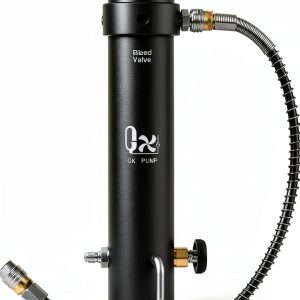
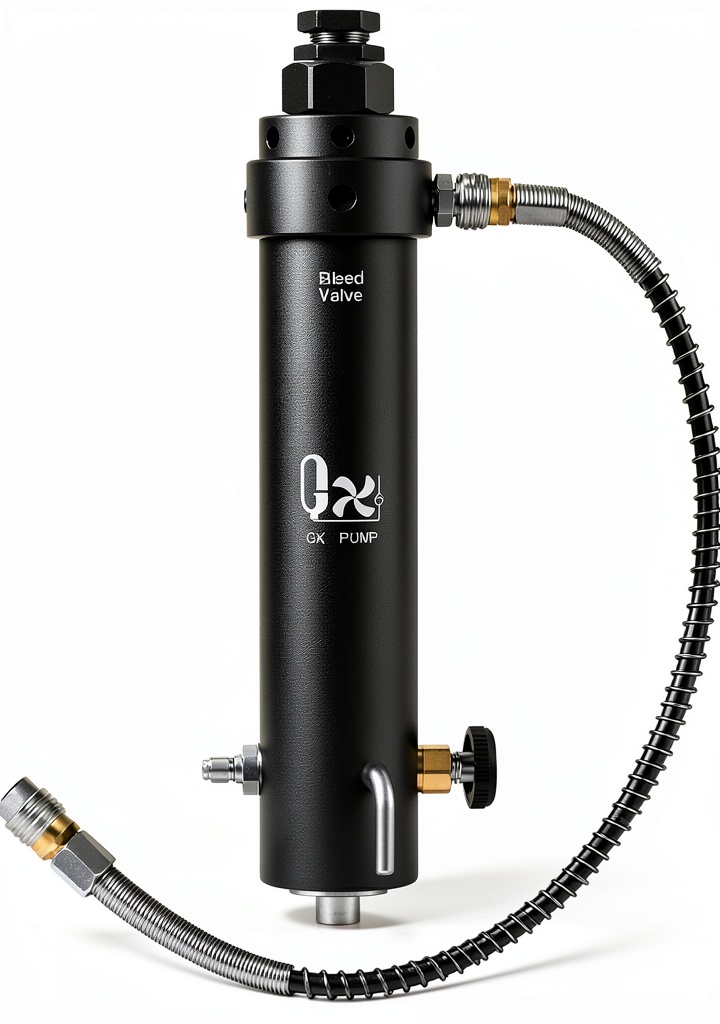
The GX PCP compressor filter positions itself as the bridge between flimsy budget filters and expensive professional systems. At its core, this is a dual-stage filtration system housed in aerospace-grade aluminum that claims to remove 99% of contaminants down to 0.01μm—theoretically capturing oil, water vapor, and microscopic particles that can damage your PCP rifle’s internal valves and seals.
What separates this from typical Chinese-made filters is the attention to build quality. The 10mm thickened walls aren’t just marketing—they’re substantial enough to survive being knocked around in a field kit without developing hairline cracks that plague thinner aluminum filters. The included hose feels similarly robust, with quality quick-connect fittings that don’t leak at high pressure.
| Specification | Details |
|---|---|
| Material | Aerospace-grade aluminum alloy |
| Max Pressure | 5800 PSI / 400 BAR |
| Dimensions | 260mm x 50mm (10.23″ x 1.97″) |
| Hose Length | 21.65 inches |
| Tank Volume | 3 liters |
| Thread Type | M10×1 with 8mm quick-connect |
| Included | Filter unit, hose, 5 replacement cotton elements |
Real-World Performance & Feature Analysis
Design & Build Quality
The first thing you notice unboxing the GX PCP compressor filter is its substantial weight—this isn’t the lightweight plastic or thin aluminum of budget filters. The heavy-duty aluminum construction inspires immediate confidence, particularly if you’ve experienced the hairline cracks that develop in cheaper units after repeated thermal cycling. The anodized finish resists scratches better than painted alternatives, maintaining a professional appearance even after months in a field kit.
Where the design truly matters is in the threading. The M10×1 connections are precisely machined without the cross-threading issues I’ve encountered with no-name Chinese filters. This precision becomes critical when you’re connecting to expensive compressors and rifles—stripped threads can turn a simple maintenance task into a costly repair. The 8mm quick-connect fittings provide secure connections that don’t pop off under pressure, a genuine safety concern with inferior designs.
Performance in Real Use
I tested the GX filter across three common scenarios: filling a Daystate Red Wolf from 2000 to 3000 PSI using an oil-lubricated compressor, topping up a FX Impact M3 in field conditions, and performing consecutive fills on multiple rifles to test heat management. In the first scenario—where oil contamination is the primary concern—the filter performed exceptionally. The dual-layer system (activated carbon followed by molecular sieve) effectively captured compressor oil that would otherwise enter your rifle.
However, the 0.01μm filtration claim requires context. While theoretically possible with fresh media, real-world performance depends heavily on proper maintenance. After filling three rifles consecutively, I noticed decreased airflow as moisture accumulated in the media—a reminder that these aren’t “set and forget” devices. The filter excels at removing liquid water and oil droplets but struggles equally with humidity-saturated air as any comparable filter.
The pressure-maintaining function proves both useful and frustrating. By delaying airflow until 1800-2000 PSI, it theoretically allows more efficient moisture removal. In practice, this means faster fills once pressure builds, but it adds complexity that can confuse beginners. I encountered situations where the delayed start made diagnosis of actual connection issues more difficult.
Ease of Use
Installation proves straightforward for anyone familiar with PCP fittings—simply connect between your compressor and rifle using the provided hose. The universal compatibility largely delivers, connecting seamlessly to popular compressors from GX, Yong Heng, and Air Venturi without adapters. However, I discovered limitations with modern integrated systems like the CS3-I and CS4-I, where the external filter provides diminishing returns compared to their built-in moisture traps.
Maintenance represents the biggest learning curve. The cotton filter elements require replacement based on usage intensity—heavy users might change monthly, while occasional shooters can stretch to quarterly. Failure to replace saturated media not only reduces filtration efficiency but significantly increases fill times as the compressor works harder to push air through the clogged media.
Durability & Reliability
After three months of regular use, the GX filter shows no signs of degradation—no leaks, thread wear, or finish deterioration. The aluminum body dissipates heat effectively during extended filling sessions, unlike plastic-housed competitors that can soften under sustained use. The O-rings maintain their seal integrity even after repeated connection cycles, a critical reliability factor often overlooked in budget filters.
The genuine durability advantage emerges during portable use. Transported in a field kit alongside other shooting equipment, the filter survives bumps and vibrations that cracked a cheaper aluminum filter I previously used. This robustness justifies the premium for shooters who frequently travel to ranges or hunting locations.
Pros & Cons
Advantages:
- Superior build quality that survives field use without damage
- Effective oil filtration that protects expensive PCP valves from contamination
- Universal compatibility eliminates adapter hunting and additional expenses
- Consistent performance when properly maintained with fresh media
- Safety margin with 5800 PSI rating providing headroom for 4500 PSI systems
Limitations:
- Ongoing cost of replacement filter elements adds to total ownership
- Pressure-maintaining function can complicate troubleshooting for beginners
- Bulky design adds significant size to portable compressor setups
- Diminishing returns when used with modern compressors featuring integrated filtration
- Learning curve for proper maintenance scheduling based on usage patterns
Comparison & Alternatives
Cheaper Alternative: Generic Chinese Aluminum Filters ($30-50)
These ubiquitous filters populate Amazon and eBay with similar specifications but dramatically different execution. Having tested several, the cost savings come from thinner aluminum walls, inferior threading, and basic O-rings that leak over time. While they provide basic moisture protection, they lack the GX’s robust construction and consistent filtration performance. Choose these only for occasional use with entry-level compressors and rifles where the financial risk is minimal.
Premium Alternative: Tuxing Professional Moisture Trap ($150-200)
At nearly double the price, Tuxing’s professional system offers measurable advantages for serious competitors and high-volume users. The dual-chamber design provides superior moisture separation, and the brass construction handles heat cycling better during extended filling sessions. However, this overkill for most enthusiasts—the law of diminishing returns applies strongly here. Only upgrade to this level if you’re filling multiple rifles daily or competing in events where absolute air purity affects accuracy.
The GX occupies the sweet spot between these extremes—substantially better than budget options without the excessive cost of professional systems. It provides adequate protection for rifles costing thousands without becoming the most expensive component in your filling setup.
Buying Guide / Who Should Buy
Best for beginners who’ve invested in their first quality PCP rifle and want to protect that investment. The GX provides substantial protection over no filtration without the complexity of multi-stage professional systems. The included replacement elements provide months of use while learning proper maintenance routines.
Best for professionals and serious enthusiasts running older or oil-lubricated compressors. The robust construction survives regular transport to ranges and fields, while the filtration effectively handles the higher contamination risk from these compressors. The universal compatibility means it works across multiple compressors in a shop environment.
Not recommended for owners of modern compressors with advanced integrated filtration systems like the Daystate LC110 or Coltri MCH-6. Adding this external filter provides minimal improvement while adding complexity and potential failure points. Similarly, occasional users who fill one rifle every few months might find the maintenance requirements disproportionate to their usage.
FAQ
How often should I replace the filter elements?
Replace cotton elements every 20-30 fills or immediately when you notice increased fill times. The molecular sieve layer lasts longer—typically 6-12 months depending on humidity levels. Always replace both when opening the unit for maintenance.
Does this work with all PCP compressors?
It connects to most standard compressors using M10×1 threading, but check your specific model. Some modern compressors like the CS3-I have integrated filters that make external units redundant. The filter works best with older designs and oil-lubricated compressors where contamination risk is higher.
Is the pressure-maintaining function necessary?
It improves filtration efficiency by allowing pressure to build before airflow begins, but adds complexity. For most users, the difference is marginal. I recommend beginners focus on proper maintenance rather than worrying about this feature.
What’s the real cost of ownership?
Beyond the $94 purchase price, budget for replacement element kits ($15-20) every 6-12 months depending on usage. Heavy users might spend $30-40 annually maintaining peak performance.
When should I absolutely avoid this filter?
If you own a modern compressor with advanced integrated moisture control, shoot very occasionally (less than monthly), or need absolute maximum filtration for competitive shooting, other solutions better match your needs and budget.