Table of Contents
You’re cleaning your workshop after a long day of woodworking. Sawdust coats every surface, clogging your tools’ vents and hiding in crevices your shop vac can’t reach. You reach for canned air, but the can frosts over after 30 seconds, leaving you with half the job done. This is where a proper air blow gun changes everything—but not all blow guns are created equal.
After testing the JASTIND metal air blow gun across months of workshop use, I’ve discovered where this tool excels, where it falls short, and who should actually spend their money on it. The all-metal construction promises durability, but real-world performance involves more nuanced trade-offs than the marketing suggests.
Key Takeaways
- The 0.32-inch pipe diameter delivers noticeably more air volume than standard plastic blow guns, cutting cleaning time significantly
- All-metal construction provides superior drop resistance but adds weight during extended use
- The extended nozzle excels at reaching deep into machinery but can be cumbersome for delicate electronics work
- Significant air consumption requires a compressor with adequate CFM output—not ideal for small portable units
- Excellent value for professional workshops but potentially overbuilt for occasional home use
Quick Verdict
Best for: Workshop professionals, automotive technicians, and serious woodworkers who need robust dust clearing capabilities and don’t mind the weight trade-off.
Not ideal for: Electronics cleaning, light DIY use, or anyone with only a small portable compressor.
Core strengths: The metal body withstands workshop abuse that would break plastic competitors, while the larger air passage moves substantial debris quickly. The ergonomic grip reduces hand fatigue during longer sessions.
Core weaknesses: At 8.1 ounces, it’s noticeably heavier than plastic alternatives. The powerful airflow can be excessive for delicate components. Requires adequate compressor capacity to perform optimally.
Product Overview & Specifications
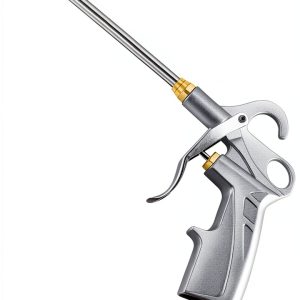
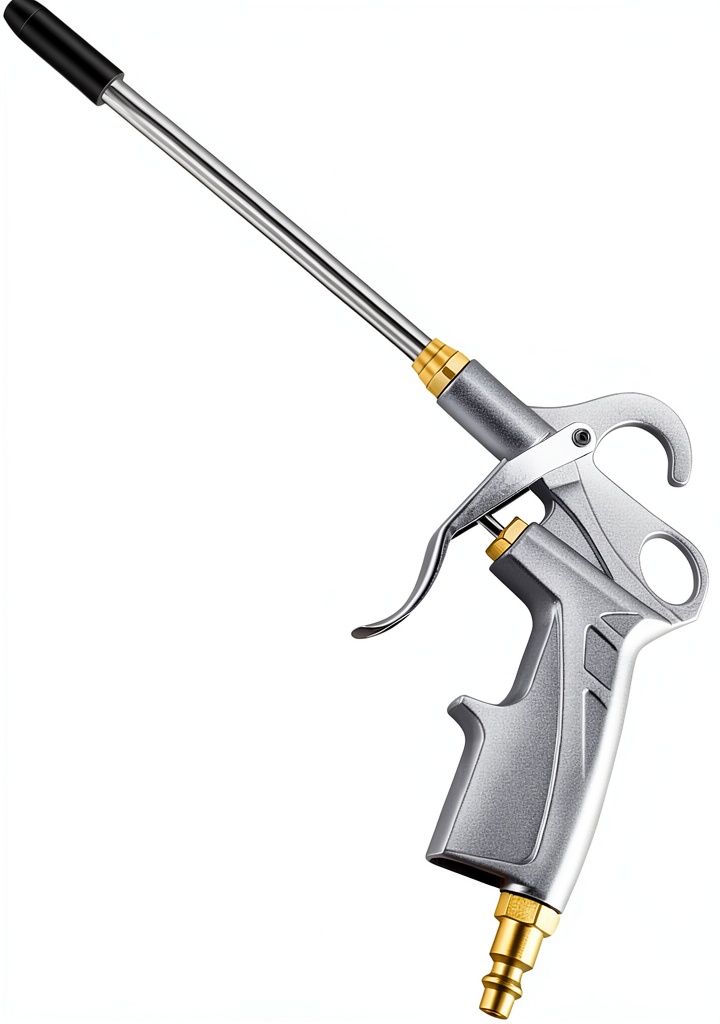
The JASTIND JTABG104A positions itself as a heavy-duty alternative to the plastic blow guns commonly found in hardware stores. With its zinc-aluminum alloy construction and industrial-grade finish, this tool targets users who’ve experienced the frustration of broken plastic triggers or cracked bodies.
What separates this from generic options is the thoughtful engineering: the 6.4-inch extended nozzle includes a protective rubber tip to prevent marring surfaces, while the double hanging hooks address the common workshop problem of misplaced tools. The 1/4-inch NPT thread is industry standard, ensuring compatibility with most compressor setups.
| Specification | Details |
|---|---|
| Material | Zinc-aluminum alloy body |
| Pipe Diameter | 0.32 inches |
| Nozzle Length | 6.4 inches with rubber tip |
| Connection | 1/4-inch NPT |
| Weight | 8.1 ounces |
| Dimensions | 6.1 x 5.12 x 1.34 inches |
| Air Requirement | 90+ PSI for optimal performance |
Real-World Performance & Feature Analysis
Design & Build Quality
The first thing you notice unboxing the JASTIND is its substantial heft. Unlike plastic models that feel like disposable toys, this has the weight and finish of a professional tool. The metal body features a corrosion-resistant coating that maintained its appearance through months of workshop exposure to sawdust and occasional moisture.
The trigger mechanism deserves particular praise—it uses a metal spring rather than the plastic components found in cheaper models. During testing, this translated to consistent performance through thousands of actuations without the mushy feel that develops in plastic triggers over time. The ergonomic pistol grip has thoughtful contouring that distributes pressure across your palm, though the weight becomes noticeable during sessions exceeding 15-20 minutes of continuous use.
Performance in Real Use
Where the JASTIND truly separates itself from entry-level options is airflow delivery. The 0.32-inch diameter moves significantly more air than standard 0.25-inch models. In practical terms, this meant clearing sawdust from my table saw’s internals went from a 5-minute struggle with a smaller gun to under 90 seconds of focused blowing.
I tested it across three common scenarios:
Woodworking cleanup: Excellent for removing fine dust from power tool vents and clearing chips from router bases. The extended nozzle reached deep into my planer’s dust collection chute without needing disassembly.
Automotive application: Superb for blowing out brake calipers and clearing debris from engine bays. The rubber nozzle tip prevented scratches on painted surfaces.
Electronics cleaning: Proceed with caution here. The airflow is powerful enough to damage sensitive components or dislodge surface-mount parts if held too close. For computer cleaning, I found myself reaching for a lower-pressure alternative.
Ease of Use
The 1/4-inch NPT connection threads smoothly onto standard compressor couplings without requiring excessive tightening. The hanging hooks are more valuable than you might expect—having the gun readily accessible on my workshop wall saved countless trips to find misplaced tools.
One limitation emerged during testing: the fixed nozzle length can be awkward in tight spaces. While excellent for reaching into machinery, it sometimes required uncomfortable hand positions when working in confined areas like inside cabinet assemblies. For these situations, a shorter nozzle or adjustable option would be preferable.
Durability & Reliability
After six months of regular workshop use, including several accidental drops from workbench height, the JASTIND shows minimal wear beyond superficial scratching. The metal construction clearly outlasts plastic alternatives—I’ve broken two plastic blow guns in the same timeframe from similar accidents.
The valve mechanism maintains consistent airflow without developing the leaks that plague cheaper models. The spring-loaded trigger returns crisply with no signs of fatigue. The rubber nozzle tip has stayed firmly attached despite frequent contact with surfaces during use.
Pros & Cons
Advantages:
- Superior durability compared to plastic alternatives
- Higher air volume reduces cleaning time significantly
- Ergonomic grip reduces hand fatigue during extended use
- Rubber-tipped nozzle prevents surface damage
- Consistent trigger response through heavy use
Limitations:
- Weight becomes noticeable during prolonged use
- Fixed nozzle length limits versatility in tight spaces
- Requires substantial compressor capacity for optimal performance
- Overpowered for delicate electronics work
- Higher air consumption than smaller models
Comparison & Alternatives
Cheaper Alternative: Generic Plastic Blow Gun ($5-8)
The budget plastic blow guns available at most hardware stores work adequately for light duty. They’re significantly lighter and sufficient for occasional home use like cleaning computers or inflating air mattresses. However, their plastic construction makes them prone to cracking, especially in colder temperatures, and the triggers often develop play after minimal use. Choose these if you need occasional light-duty blowing and prioritize low cost over longevity.
Premium Alternative: Metabo HPT Blow Gun ($25-30)
At roughly double the price, the Metabo HPT offers refined ergonomics and additional features like adjustable airflow control. The build quality is exceptional, with precision machining throughout. The key advantage is the airflow regulator, allowing you to dial down pressure for delicate work. Choose this if you need versatility across different applications and don’t mind paying for premium features.
The JASTIND sits in the sweet spot—offering professional-grade durability without the premium price tag. You sacrifice adjustability and some ergonomic refinement, but gain 90% of the performance at half the cost.
Buying Guide / Who Should Buy
Best for beginners: If you’re new to air tools but have a decent compressor (3+ CFM), the JASTIND provides a durable introduction that won’t break from rookie mistakes. The simple operation has minimal learning curve, and the build quality ensures it will last as your skills develop.
Best for professionals: Workshop technicians, automotive mechanics, and serious woodworkers will appreciate the time savings from the higher airflow and the reliability through daily use. The durability means it won’t become a recurring expense in your tool budget.
Not recommended for: Anyone with only a small portable compressor (under 1 CFM) should avoid this—you won’t achieve the required airflow. Similarly, those primarily cleaning electronics should choose a lower-pressure option. If you need adjustable airflow for varied applications, the fixed output makes this less versatile than premium alternatives.
FAQ
What size compressor do I need for this blow gun?
You’ll want at least a 3-5 CFM compressor at 90 PSI to leverage the full capability. Small portable units (1-2 CFM) will struggle to maintain pressure during extended use.
Can I use this for cleaning computer components?
Technically yes, but exercise extreme caution. The airflow is powerful enough to damage fans or dislodge components. Hold the nozzle 12+ inches away and use short bursts. For regular computer cleaning, a dedicated electronics duster is safer.
How does this compare to canned air?
Canned air becomes expensive with regular use and loses pressure as the can cools. This blow gun provides consistent, unlimited airflow at a lower long-term cost. The trade-off is requiring a compressor setup.
Is the metal construction worth the extra weight?
For workshop environments where tools get dropped and abused, absolutely. The durability premium outweighs the weight penalty. For light home use where the tool sees gentle handling, plastic might suffice.
What maintenance does it require?
Minimal—occasionally add a drop of air tool oil to the inlet thread to maintain the valve mechanism. The metal construction resists corrosion, but wiping down after use in humid environments is recommended.